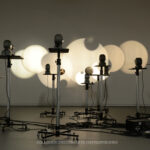
During the PROYECTOR Festival, the INELCOM Collection will open its doors from September 10 to 21, 2025, with special programming:
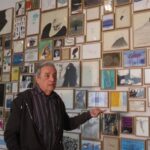
On Tuesday, September 16, there will be a guided tour of the audiovisual pieces in the collection with a guest artist.
During this tour, we will provide a free shuttle bus from the center to the venue (round trip). Departures will be from Estación del Arte at 11:15 a.m. This is a free event with previous inscription necessary for both the tour and the buses.
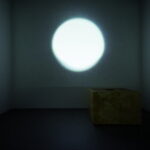
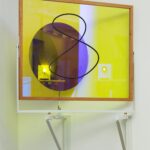
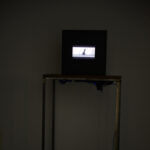
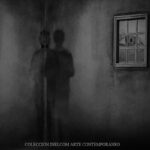
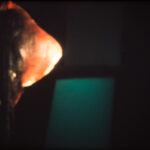
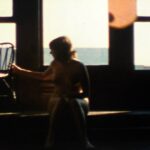
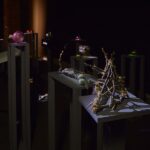
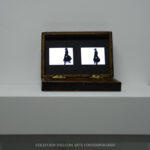
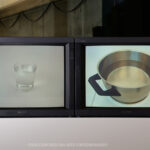
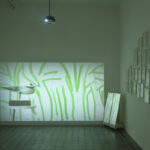
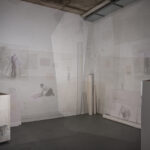
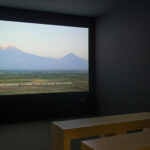
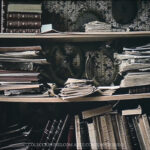
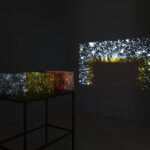
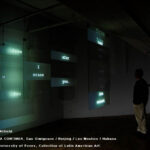
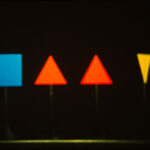
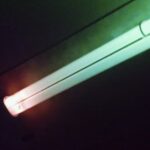
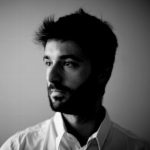
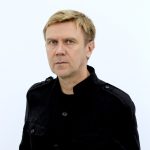
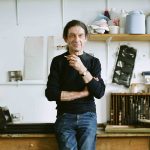
A talk will be held with guest artist Pablo Useros (ESP), who will present his piece, The Metamorphosis, in the INELCOM Collection exhibition space. His work will be on view from September 10 to 21.
The Methamorfosis
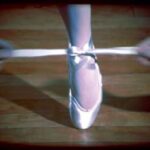
In literature, ellipsis works differently. Time jumps occur at will. We mark books, return to those marks, and mark them again—or unmark them. We are left with doubts, reread, or look for the ending to know what will happen next so we can read more calmly. We begin in media res, we experience stories in retrospect, between comings and goings. In cinema, however, the experience is different, at least in classical cinema. Unlike 16mm film, which only knows the forward movement, we have no choice but to advance to the end. Word by word, frame by frame, always at the same cadence. Always forward, cinema measures time for us.
//
Borges points out that a more accurate translation of the title of Kafka’s work would be The Transformation. Today, The Metamorphosis has become its canonical title. Changing medium, as occurs in a translation, is in itself a transformation, and all transformation implies change. Pages become frames. Words are transformed into images that remain words. The text is transferred to a new materiality, to another medium, and this provides meaning.
If literature communicates with words, cinema does so with a mixture of text and image. In this metamorphosis, the text never loses its form; the words remain words, but they lose their function. The shape of the letters remains, but they no longer communicate. The a becomes an ink stain on cellulose, a frame on the screen, the light of the slide. The code of language dissolves into a sea of ephemeral forms that we can barely read. For the Jewish tradition, of which Kafka is an heir, the word not only represents things, it makes them present. And God said: Let there be light; and there was light. The word not only precedes the thing, but also materializes it in a magical act. Language ceases to be a human way of understanding the world and becomes a divine way of doing things. In both cases, language creates worlds, metaphorically or figuratively. It is said that we live in an age of images, but perhaps we live more in an age of words and texts. A time when words don’t materialize things, but rather represent them, only to later replace them. Words take their place and engulf them. The arrogance of words. Reality increasingly becomes verbal, even though we feel there’s always something that escapes language. The abyss of reality beyond words. Because if we accept that words don’t refer to real objects but to concepts, it would be naive to ask them to reflect the world.
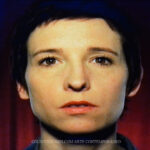
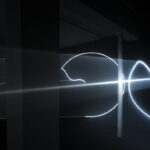
The words, which once communicated, now become form. The symbol dissolves. Her vocal sonority accompanies this idea and transforms into the gray noise of the machine. A mantra on the screen that seems to fall like a rain of light and ink.
Text by Santiago Colombo Migliorero