Incarnation
Fun Facts of Movie
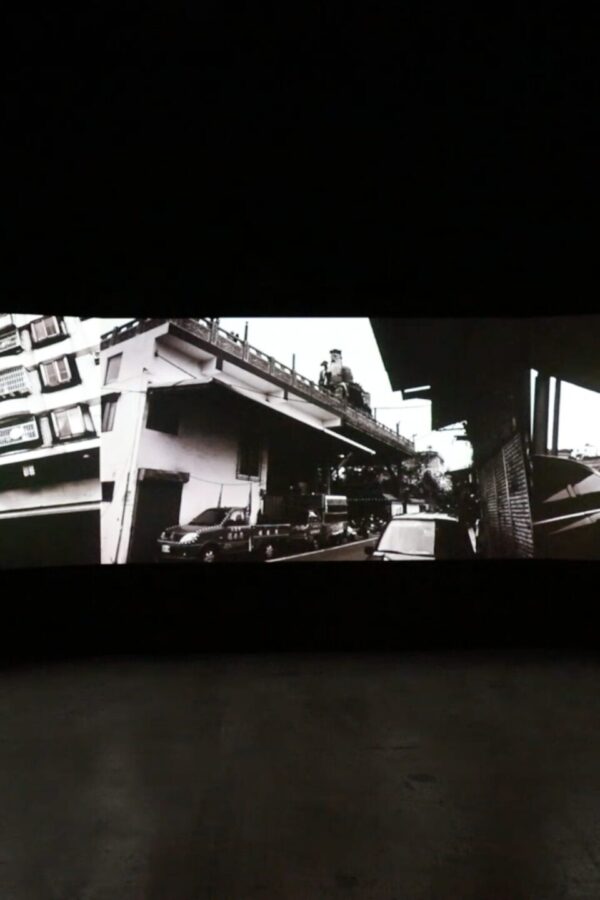
Incarnation is a series conceived by Yao Jui-Chung in early 2016, based on an extensive photographic journey through more than 230 temples, cemeteries, public gardens and amusement parks across Taiwan over a period of eighteen months. The work focuses on monumental statues of deities created by Han Chinese communities, understood as projections of human desires, fears and collective imaginaries. Some of these figures remain standing, while others are damaged or abandoned, revealing complex political, social and territorial relationships.
The artist deliberately avoids human presence, as well as ceremonies, festivities and narrative scenes, concentrating exclusively on the physical embodiment of the gods: monumental manifestations of the desires projected onto them by their devotees. Through a detached, objective and almost typological approach, Yao examines the relationship between humanity, religion and faith, shifting attention away from sacred architecture and ritual towards the more tangible and absurd dimensions of belief.
Taiwan has more than 12,000 temples, forming one of the most extensive and distinctive religious cultures in the Chinese-speaking world. Within this context, temples respond to earthly needs and aspirations for well-being, health, protection and prosperity. Devotion is sustained not only by faith itself, but also by the perceived effectiveness of the deities and the symbolic power of their monumental representations. Set against the urban landscape, Yao captures the strangeness and excess of these sculptures, revealing both an unexpected beauty and the deeply sensual dimension of contemporary society.
The series comprises approximately 300 gelatin silver prints and a three-channel video installation. In the latter, recordings of Saturn’s radio emissions captured by NASA accompany a visual journey through a wide variety of divine figures, creating a kind of mystical road movie across Taiwan, in which history, society, religion and desire become closely intertwined.
In his theoretical approach, Yao compares these monumental statues to technological systems: if the principal deities were supercomputers, their numerous replicas would function as terminals connected to a spiritual network. Through this analogy between religion, technology and collective desire, Incarnation reflects on faith as a cultural construction, the power of images and the illusory nature of all representation.
Cast & Crew
Artista